
 |
 |
 |
 |
 |
 |
 |
 |
Welcome to the Cornwall Tourism Magazine - Cornish Mining World Heritage Site page.
|
|
 |
 |
 |
 |
 |
 |
 |
 |
 |
 |
 |
 |
 |
 |
 |
 |
Mining in Cornwall - the heritage of Cornwall's history.
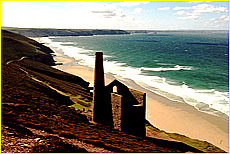
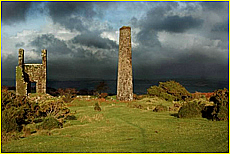
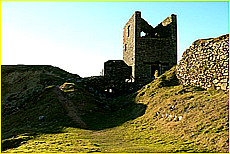
Cornwall is known for many things, surfing, pasties and holidays, but in years gone by, it had a major impact on the world and fed a whole new industrial revolution over many centuries. Mining and the significant impact this massive industry had can be seen all over Cornwall in the shape of long abandoned and ruined steam engine houses, disused tramways that stretch across the countryside like long dried rivers. You can also see the spectacular spoil heaps that are now as much a part of Cornwall's landscape as the rocks and cliffs on the coast along with the old harbour towns that now seem asleep but would have been, in their hey day, alive and thriving centres of industry. All of that was in the past and other than the odd ruin, you would be forgiven for thinking that there seems to be little trace of this huge industrial machine now. However, you would be very wrong.
One World Heritage Site status.
The former mining sites and related areas have gained World Heritage Site status and the organisation behind it has now opened up the sites of mining past and what's more you can go and visit them and find out about the geology of the area which formed the foundations of the mining industry, the people who made their livings from it and the huge technological advances Mining brought to Cornwall and the impact it had on the land, space and people. Everywhere you go in Cornwall, there’s physical evidence of a region shaped by mining and the need to support and expand it from terraced cottages to grand stately homes, rugby to rhododendrons and the stories of lives lived around mining reveal the successes and struggles of Cornish communities and now you can find out all about them.
Ten Districts and attractions to visit.
There are ten separate Mining Districts in Cornwall and one in West Devon, just on the Cornish border. In the Map and Mining Attraction site listings section below you can see how they are mapped out and will find some information on the actual mining sites in each district. If you want to find out more, please go to the Cornish Mining website where you will find a lot more information on the various Mining Heritage Sites and related locations.
 |
 |
The Cornish Miner's.
The Bal Maidens.
Although they didn't generally work below ground, women and young girls played a big part in the Cornish mining industry. Known as ‘bal maidens’, the word ‘bal’ is Cornish for ‘mining place’, they dressed the ore brought up from underground which was extremely hard, physical work and very quickly took a toll on their health and appearance. Whilst they tried to protect their heads and faces from the sun, wearing cardboard hoods (‘gooks’) to shade their complexions, accounts from the time often mention their rough, chapped hands which suffered terribly from the rough, sharp ore rocks. They did try to protect their hands though so the fancy gloves they are famous for wearing, bought from the chapman, were not a luxury for these women. Teams of women and girls were also employed in barrowing ore around the dressing floors which was a very hard and physical job and they worked in pairs using hand barrows, often carrying over 68kg at a time, which was more than the weight of an average man in those days.
The Children.
Children were also involved in the mines too and in 1839, there were over 7,000 children employed in Cornish mines. It was all a question of money and survival. Everyone in the family had to contribute just so they could live their very basic lifestyle, so by the age of 8 or 9, a miner’s son or daughter was deemed old enough to make their contribution to their family's limited income and were sent to the mines to work. As you can appreciate, it was very hard for them and although until they were aged 12, they worked mainly above ground doing menial jobs such as sweeping and tending the tin buddles or settling strips, many complained about the effects of over-exertion in the 1842 Children’s Employment Commission's report. Nothing really changed though but eventually, changes in legislation did regulate the use of child labour. In addition, the invention of new equipment meant that many of the support activities were increasing mechanised so the need to employ them gradually reduced and finally ended in the mid 19th Century.
Home life and living conditions.
For mineworkers and their families, homes and accommodation were often overcrowded, cramped and very unsanitary, and were usually rented on terms that guaranteed no promise of security. As a result, families involved in the mining industry had to learn to become mobile and adaptable. Beyond the towns and villages, mining families often lived in granite or cob cottages on smallholding's with perhaps three to five acres of land to tend. This brought a degree of self-sufficiency where they were able to grow their own food and perhaps keep a pig or two. Others lived in terraces or rows of cottages without land whilst others lived in towns where gardens were small or sometimes replaced by courtyards, offering them little opportunity to supplement their diet with garden produce so life was hard for them.
A daily struggle.
Accommodating big families in damp overcrowded cottages with a lack of adequate sanitation meant a daily struggle with the sleeping arrangements being complicated with several children and adults sleeping in one bed. In addition, there was generally no indoor water supply or bathroom, the lavatory being an earth closet outside and the only heat coming from an open fire that invariably filled the small rooms and cottages with smoke. It wasn't just the conditions they lived in. The rents were very high so to make ends meets,
the Miners’ families often had to take in lodgers to supplement their incomes. This very quickly became wide spread in some areas as proven by a Census taken in 1861 which reported that over 60% of the lodgers employed in the mining industry in Camborne and Redruth were accommodated in the houses of fellow miners.
Massive industrialisation.
Much of the Cornish mining landscape, over 80,000 hectares, is in upland areas that is commonly treeless, exposed, very wet and also had very thin acidic soil meaning it was not really suitable for agriculture. In deed, this ancient landscape was once heathland and until the late 18th century, was largely unfarmed and extensively used for common grazing, but as the mining industry began to grow to satisfy the huge demand for Cornwall's minerals, things began to change and it then began to be farmed. Most of the mining industry’s housing was formerly located within existing market towns and villages in the mining districts, but during the early 19th century the Cornish copper mining industry was expanding into entirely rural areas with mines being opened up remote areas far away from established settlements. This required entirely new villages and towns to be built and developed to accommodate the new industrial population and the demographical layout of Cornwall quickly began to change.
Mining - how its wealth changed the Cornish landscape forever.
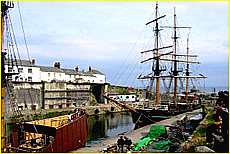
The wealth accrued by the landowners or mineral lords form their mines enabled the construction of grand new estates and gardens, while many older estates underwent elaborate transformations. Mineral lords, such as John Francis Basset, also made available previously uncultivated land for use and over 50,000 hectares were taken into cultivation during the 18th and 19th centuries. Subsequently, the impact on the landscape was considerable and much of the moorland and heathland that covered large areas of Cornwall was used for food production for the first time and was changed forever.
 |
 |
 |
 |
Demographical changes.
As Mining grew, it also radically changed the population distribution within Cornwall. As mines panned out and others were opened and its expansion gathered pace, there was a marked movement of workers and their families from the west of Cornwall to the east and some areas were virtually empty whilst other areas quickly became heavily populated. As an example of this, Camborne grew from a small village to one of the largest towns in west Cornwall, witnessing significant inward migration from eight other districts, but this was not without it's problems. With the miners being forced to live in damp, overcrowded cottages, diseases such as typhus, typhoid, measles, smallpox and diphtheria were widespread and as there were not any real treatments or cures then, the mortality rate was quite high. During the cholera outbreak of 1848/9, for example, figures for the Cornish Registration Districts show that locality was very strongly linked to the level of fatalities with the highest densities being in the unsanitary large towns and overly populated mining districts.
Sanitation issues in the towns.
Such rapid industrialisation also quickly began to create social problems similar to those encountered in other industrial areas of Britain. For example ,in the mid-19th century, the ratio of the number of toilets to the number of houses was surprisingly low by modern standards. For this reason, people were forced to relieve themselves behind walls and hedges, making many suburbs very unsanitary. To make things worse, many towns’ wells were often contaminated with sewage from overflowing communal cesspits, which were sometimes sited uncomfortably close to people’s doors. The names of some of the housing areas in Redruth such as Dung Pit Houses, Poverty Court and Dirty Court, clearly reflect the poor 19th century living conditions in this part of the town,but Redruth was not alone in this. All mining towns and areas suffered the same.
Spilling out into the countryside.
Many rural areas suffered as well. The public outcry against the serious housing shortage and gross overcrowding in the Tavistock area was one reason which prompted the Duke of Bedford to construct purpose-built accommodation on his estate for his mine workers. However, as good as this was for those miners able to live there, it was only with the increased public health legislation of the late 19th century that made conditions start to improve. However, the changes took their time to filter though to everyone and it was not until the mid 20th century that many mining villages received piped water and proper sewage systems. And in the case of the former mining villages of the St Just and Gwennap districts, this didn't happen until the 1960s.
Don't ruin the neighbourhood.
Many of Cornwall’s mining towns and villages were also rough areas where rioting, fighting and heavy drinking were commonplace. Mine workers often met in local pubs or ‘kiddleywinks’, beer shops to split their monthly earnings and gambling, singing and heavy drinking often ensued, leading to ‘Maze Monday’ when men were still too inebriated to turn up for work. Too much drink on payday was also the cause of disturbances, which led to Temperance Societies in some towns setting up Coffee Taverns as an alternative to the pubs. Prostitution also flourished in many mining towns and areas and still has an impact. The row of stones opposite Wheal Betsy engine house at Mary Tavy earned the sobriquet ‘Annie Pinkham’s Men’ which is an echo of the former prostitution that took place in the village. There was also another price to pay for this as increased reports of the concealment of births by women who had become pregnant out of wedlock making their way into the 19th century press testified.
Community spirit.
Things were not all bad though and episodes of crime, rioting and prostitution were only one side of life in mining communities. Although many had a very deserving reputation for roughness, Cornish mining villages were also very close-knit communities with many people being related and looking out for each other. Mining towns and villages were also places where people could forget their worries and problems by attending events organised by local chapels, such as improvement societies, bazaars, penny readings and choral ensembles. Feasts and celebrations also emerged, many including games, fireworks and singing which were often a joyous sense of local identity.
The annual Sunday School Tea Treat, for example, was a parish feast day and annual harvest event, as were other keenly awaited events in the social calendar. Lamp societies were also established to improve the communities and raised money to install gas lighting in mining villages in the late 19th century. Women were also involved in charity organisations such as the Dorcas Society to raise money for clothing and bedding for the most needy. You can find out a lot more about the miners and how they lived in the various exhibitions spread across the ten heritage sites listed below.
World Heritage Status.
The World Heritage Site status recognises the importance of Cornish mining’s historic landscapes, on a global scale. Cornish miners and engineers developed technologies which transformed mining worldwide. The Cornish Mining World Heritage Site contains over 200 iconic Cornish engine houses, the largest concentration of such monuments anywhere in the world, but it is a lot more than just mine sites. The Tin Mining industry impacted on all aspects of life and many of our towns and villages were either completely transformed by the growing industrial population needed to service the industry or in a number of cases, completely new settlements were built to house them. This legacy can been seen all over Cornwall in the form of rows of distinctive terraced cottages, shops, chapels and substantial public buildings. So visit the Mining sites and see what it was really like and why at one period in time, Cornwall was actually the very centre of the World. Now you can't beat a heritage like that.
|
 |
 |
 |
Discover the extraordinary story of how mining changed Cornwall’s landscape and people forever. Listed here are many of the attractions within
the Cornish Mining World Heritage Site.
 |
-Tamar Valley & Tavistock |
 |
-Caradon Mining District |
 |
- Luxulyan Valley & Charlestown |
 |
- Gwennap, Kennall Vale and Perran Foundry |
 |
- St Agnes Mining District |
 |
-St Just Mining District |
 |
- Tregonning and Trewavas District |
 |
- Camborne & Redruth Mining District |
 |
-Port of Hayle |
 |
-Wendron Mining District |
|
TAMAR VALLEY AND TAVISTOCK |
Cotehele - A wonderfully preserved Tudor house situated deep within the Tamar Valley. Outside, the ‘Valley Garden’ is home to a medieval stewpond and dovecote and the Upper Garden and orchards. Cotehele Quay - Cotehele Quay is the home of the restored Tamar sailing barge Shamrock and is gateway to a wider estate. The Discovery Centre tells the story of the Tamar Valley. Kit Hill - With more than 400 acres of heathland to explore, Kit Hill Country Park shows how humans have worked minerals on marginal upland since the stone age. Located in the Tamar Valley Area of Outstanding Natural Beauty. Morwellham Quay - Costumed guides reveal what life was like in the heart of the Tamar Valley; learn about rope-making, find out what school was like for the Victorians, or come along to the Harbour Master’s tour. Tavistock and Tavistock Museum - This west Devon town has been a monastery town, a market town and a mining town. New: Exhibition cases and extension of the museum, Tavistock Town Audio Trail.
|
CARADON |
Liskeard Museum - Linking the past, present and future of the area through displays and resources for visitors. Foresters Hall, where the museum is housed, was originally built as a banking hall in the 1850s. Minions Heritage Centre - Housed in the houseman’s engine house. There’s a new exhibition and lighting. New: Brand new heritage centre.
|
LUXULYAN & CHARLESTOWN |
Wheal Martyn - Set in 26 acres of woodland walks, nestled in the historic Ruddle Valley within two former clay works, Wheal Martyn gives a fascinating insight into Cornwall’s important billion pound china clay mining industry. New: Interpretation and displays.
|
GWENNAP |
Gwennap Pit - An impressive open air amphitheatre made famous by Methodist founder John Wesley. Its acoustic properties are perfect for performances. New: Interpretation and signage. Royal Cornwall Museum - Discover Cornwall’s unique culture from the past to present. Explore minerals, archaeology and history along with Newlyn School paintings.
|
ST AGNES |
St Agnes Museum - The museum tells the story of St Agnes from mining to fishing. Highlights: Portraits by John and Edward Opie and the Whitworth Collection depicting five generations of village doctors from one family. New: Major gallery refit with new display cases, interpretation and improvements to public access.
|
ST JUST – MINING DISTRICT |
Botallack Count House - Built during the 1860s at the height of the mining boom, the Count House stands near the Crowns Mine. It’s where the miners collected their pay. New: WHS Audio Trail. Geevor Tin Mine - Located between St Ives and Land’s End, the mine is one of the largest preserved mine sites in Britain. Geevor’s collections and guides bring the story of Cornwall’s rich industrial past to life. New: Extension of the underground tour and a new WHS exhibition and audio trail. Levant - On its dramatic cliff tops, the surviving buildings and ruins offer a window onto another world where men and women toiled to extract the riches of the earth from beneath the crashing waves.
|
TREGONNING & TREWAVAS MINING DISTRICT |
Godolphin - This beautiful location is managed by the National Trust. The garden is largely unchanged since the 16th century. The Godolphin family made their wealth from the local tin mining industry. New: A new reception building.
|
CAMBORNE AND REDRUTH |
Cornish Studies Library - The Cornish Studies Library in Redruth holds over 30,000 volumes covering Cornish geography, industries, customs and highlights Cornwall’s mining heritage. East Pool Mine ( National Trust ) - At the very heart of the Cornish Mining World Heritage Site sit two great beam engines, originally powered by high-pressure steam boilers introduced by local hero Richard Trevithick. New: Film about Cornish Mining. Heartlands - The £35million project is transforming 19 acres of mining land into a unique cultural space. A free interpretation centre is situated around the Old Robinson Shaft at Pool. King Edward Mine - Specialising in the history of Cornish mining. New: Winder and compressor house (commended in the Cornwall Buildings Group awards), new interpretation about Holmans’ engineering, and an audio visual/lecture room. The Mineral Tramways cycle trail is nearby. Mineral Tramways - Whether you choose to cycle, walk or ride, this 37 mile network of trails, centred around Camborne and Redruth, provides mainly level, traffic-free access to one of Cornwall’s historic mining regions. New: WHS Audio Trail at South Wheal Frances.
|
HAYLE MINING DISTRICT |
Hayle - Taking its name from Heyl, the Cornish word for estuary, the town’s proximity to the mining centres of Redruth and Camborne made this town one of the most important mining ports and steam engine manufacturing centres in the world. St Erth and Hayle Foundry Walk - Visitors can park by the church adjacent to the bridge over the River Hayle at St Erth. Follow the path to the river and continue along the riverside path to the RSPB Sanctuary at Ryan’s Field. A beautiful walk that is well worth a visit.
|
WENDRON |
Poldark Mine - Provides a fascinating view of tin mining and the Cornish overseas. A real 18th century tin mine and Heritage Museum. New: Museum redisplay and a Cornish Miners overseas exhibition, a new audio visual facility and improvements to public areas, restoration to a winding engine,
|
 |
Our business methodology is very simple. We are promoting Cornwall as an all year round holiday destination and to do this more effectively, we need your local stories and feed back from your visit to Cornwall which we will post on a dedicated page, so please send us your thoughts and any tourism related local stories or your feedback on your stay in Cornwall. We will publish them on the website every two weeks and we will give the best story of each fortnight a free Cornwall Pass so please send your stories and information to us on editor@cornwalltourismmagazine.com and we will publish them for you.
 |
The Cornwall Pass - save money at over 300 different businesses when you visit Cornwall and Devon.
If you are holidaying in Cornwall or Devon, just visiting us for a few days or live in Cornwall, you can save money at over 300 businesses with the Cornwall Pass. The Cornwall Pass is a discount card that allows visitors to Cornwall and residents to make big savings at over 300 businesses all over Cornwall. It has been in operation since 2008 and gives you discounts and savings at over 300 businesses like Attractions, Restaurants, Accommodation, Cornish Farm Holidays, Activities, Historic sites and Gardens, Zoo's and Wildlife Parks, Surfing, Body boarding and Coasteering, Holiday Parks, Golf Courses, Taxi's, Dining Pubs and many others across Cornwall.
Discounts start at 10% with many of our participating businesses offering much higher discounts. Each Cornwall Pass covers up to 5 persons and can be used as many times as you like, in as many different participating businesses as you like. If you are visiting Cornwall there is a 7 Day or 14 Day Pass for £7.00 and £10.00 and for frequent visitors and residents there is a 12 month Pass for £20.00 and to put the Pass into perspective, you can easily save up to £200.00 a week or more. For more information and to purchase your Cornwall Pass using our secure on-line purchasing system, please click here, the Cornwall Pass.
|
 |
 |
 |
|
 |
|
 |
|
 |
|
 |
|
 |
|
 |
 |
|
|
|
|
|
|
|
|||||||
 |
 |
 |
 |
 |
|
 |
 |
Advertising and Distribution Information | Magazine Advertising Rates | Magazine Advertising pre-booking form
The Cornwall Pass | Information Privacy Policy | Cornwall Tourism Magazine
The Cornwall Tourism Magazine . Copyright (c) 2011 - 2023 Cornwall Tourism Magazine. All rights reserved. Website Design In Cornwall
|


