
 |
 |
 |
 |
 |
 |
 |
 |
Welcome to the Cornwall Tourism Magazine - National Lobster Hatchery Review page.
|
|
 |
 |
 |
 |
 |
 |
 |
 |
 |
 |
 |
 |
 |
 |
 |
 |
 |
 |
 |
 |
 |
 |
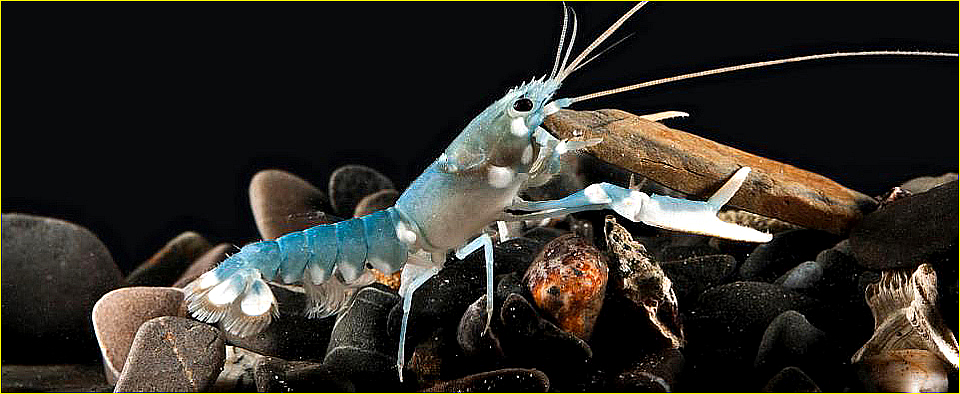 |
The National Lobster Hatchery invites you to - meet the Lobsters.
Mention Lobsters to anyone and they automatically think of how they look on a plate. In years gone by they were considered as an exotic food source which was the domain of the rich and famous. Since then their appeal has increased and now all of us can enjoy them. However, there is much more to a Lobster than just a source of food in a restaurant and the aim of this review is to tell you more about them and also to promote The National Lobster Hatchery who not only breed them, but also release them back into the sea to ensure they continue to survive in the wild.
Lobsters - so much more than meets the eye.
So what, its just a Lobster I hear you say and yes you are right, they are just Lobsters. But to simply dismiss them just as creatures that live in the sea and are destined to end up on a plate is totally wrong because, quite apart from their naturally graceful beauty, they are also a lot more interesting than you think. In addition, our Lobsters also support a whole industry in Cornwall that employs hundreds of people so if they were not around anymore one day, you will certainly miss them. But they are also so much more than just a meal at a restaurant. They are very fascinating creatures and the more you find out about them, the more you end up loving them, so please read on and find out why we think Lobsters deserve a chance to survive and why the National Lobster Hatchery needs your support.
Lobsters - so what are they really?
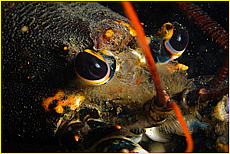
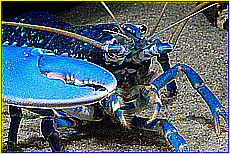
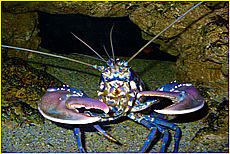
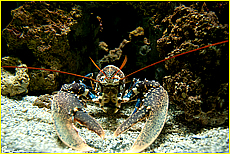
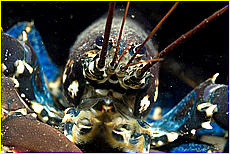
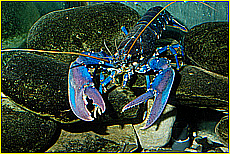
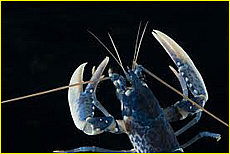
The European Lobster, or Homarus Gammarus to give it is full Latin name, belongs to a family of animals called Crustaceans. These creatures, which also includes crabs, have an external skeleton and live predominantly in water, although some species of crab also live on land. Lobsters however, only live in the sea. There are in fact several separate groups within their family tree which have all taken slightly different evolutionary paths, however, it is the larger, clawed members of the family that we associate with the name Lobster and along with living in the sea in many areas around the world. They are also a native of our Cornish waters and this species, understandably, is called the European Lobster. Lobsters have a fascinating life cycle and are quite unlike anything else you have ever come across before and are also, we think, very cute. So why do we need the National Lobster Hatchery?.....Well let's find out.
 |
 |
 |
 |
The National Lobster Hatchery - the Lobsters Guardian Angels.
Now if you walk around any port, harbour or coastal town in Cornwall, you will see hundreds of Lobster Pots and Baskets laying around and boats coming and going off to fish for them, so you might be forgiven for thinking there are millions of Lobsters swimming around in our coastal waters and therefore, there is no need to conserve them. However, in that, you would be very wrong, because just like everything else that lives around our coast line and gets fished, the Lobsters are under threat and this is where the Hatchery comes in. The National Lobster Hatchery in Padstow, run by General Manager Dom Boothroyd and his team, is a charity based organisation that as their name suggests specialise's in conserving the Cornish Lobster population to ensure its long term sustainability. The Lobster's Guardian Angels if you like and these guys are very good at what they do.
The pressure is on.
Lobsters, like all fish stocks, are heavily fished and, because they provide the income for many hundreds of people in Cornwall from the fishermen through to the many support industries, if their population were to crash or dramatically fall in size, the impact on Cornwall would be catastrophic. It isn't just that though. Lobsters also have a very important role in the ecology of the coastal areas around Cornwall and their loss would have a detrimental effect on the environment. So they are not there just here for us to eat. They are also very important as a species in their own right.
Lobsters rock.
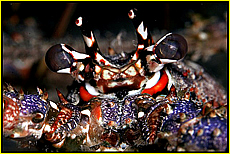
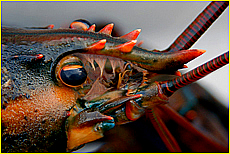
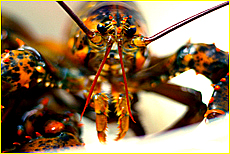
There are also other reasons why we need to conserve them. They are very unique and intelligent creatures and have some amazing qualities that are explained in the Facts on Lobsters section at the bottom. And its when you look at their life cycles and life style, that you find that they really rock. But don't take our word for it, read on and find out about them and the National Lobster Hatchery for yourself but we do warn you, this is likely to change your view of them forever.
 |
 |
 |
 |
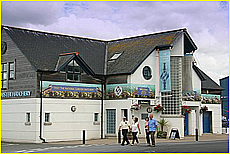
The National Lobster Hatchery Visitor Centre - come and see the Lobsters and discover their world.
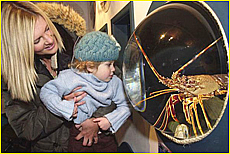
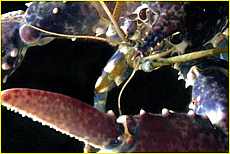
Now on face value, you might think that a visit to a Lobster hatchery is going to be boring. After all, how interesting can it be looking at baby Lobsters swimming around and looking at jars full of eggs?.....Well, actually it is a lot more than that. A visit to The National Lobster Hatchery at Padstow is a fantastic day out and offers a rewarding experience for everyone. They have lots of different exhibits and you can see all the work they do and the different stages of a Lobsters development from a tiny egg through to a fully mature adult. They also have their resident giant Lobster as well as Edible and Spider Crabs and display a wealth of information about Lobsters, fishery and marine conservation, as well as offering excellent activities for all ages. Their staff are also always on hand to answer your questions and they all work to make sure you get the most from your visit.
Support your local Lobster - pay them a visit.
As discussed elsewhere, the National Lobster Hatchery is a registered Charity which means they need donations as part of their ongoing funding so everyone who visits them, is helping them to keep going and also the Lobsters. Now although they may look like an Alien life form, Lobsters are very, very cute ( especially the baby ones ) so they really do deserve a chance to survive and the research and work the National Lobster Hatchery does, its both very important, not just for the Lobsters but all the other sea creatures that live around Cornwall, and also crucial to the long term survival of the Lobsters as well as the related industries in Cornwall. In short, no National Lobster Hatchery, no Lobsters, so you can see by visiting them, not only are you supporting their work, you are also ensuring the long term survival of what is perhaps one of the most fascinating animals ever to live in the sea.
Your admission to Lobster world.
As you will expect, looking after the Lobsters is a 24/7 job so you will find the National Lobster Hatchery open 364 days of the year. The only day they are not open is Christmas Day and given the amount of work and effort the whole team puts in, often working around the clock, I think we can allow them one day off a day a year. Now given their Charity status, and the ongoing need for funding, you might think it is going to be an expensive visit, but you would be very wrong. It isn't. In fact as an attraction in Cornwall it offers incredibly good value; with Adults paying just £3.50, Children just £1.50 ( kiddies under 5 go free by the way ), Senior Citizens pay just £2.00 and a Family ticket, that's 2 Adults and 2 Children, cost just £7.50.
When you can see them.
As already mentioned above, they are not open on Christmas Day, but they are open every other day and here are the times throughout the year - Winter - 29th October to 28th March - 10.00 am - 16.00 - Spring - 16th April to 19th July - 10.00 am - 17.00 - Summer - 20th July to 2nd September - 10.00 am - 19.30 - Autumn - 3rd September to 19th October - 10.00 am - 17.00. They also stay open for longer at other times of the year like at Easter, Whitsun, over the Christmas period and at various school Half-Terms so please check their opening times on their website here: National Lobster Hatchery - Opening times.
Gifting and Gift Aid - give the Lobsters a present.
Like all Charities the National Lobster Hatchery also benefits from Gift Aid which in essence means that for every £1.00 you give them, they can claim an extra £0.25 back from the Inland Revenue adding another 25% to your Gift Aid donation. To enable them to benefit from this you have to give them money via the Gift Aid rules, so if you want to help them, as at their very low admission prices, it is a very nice gesture, please ask them for more information. Of course, you can just give them some extra money if you want, but to maximize their revenue, Gift Aid is better for them. If you really want to help them out and support them a bit more, you can become a Friend by paying £5.00 or more a month or making a specific donation. You can also support them from a business perspective and other sponsorship options available and there is more information on these on their website: National Lobster Hatchery - Donations.
 |
 |
 |
 |
The Lobster Gift shop.
Along with their exhibits they also have a lovely gift shop where you can purchase all things Lobster. Of course you won't find any real Lobsters for sale because for obvious reasons they don't want you taking any home to eat them. And although they are really very cute, as they need to live in the sea, they don't really make ideal pets to keep at home either but you can buy your little loved ones lots of soft cuddly Lobster toys as well as many other gifts. And as they are a Charity, all proceeds go towards keeping the visitors centre open and also funding their work, so when you go there be generous and help the Lobsters, because you really can make a difference.
Adopt your own Lobsters - or a whole family of them.
As you may be discovering by now, Lobsters are fascinating animals and if you go to the National Lobster Hatchery, you can't help but fall in love with them. Indeed, a lot of people who visit want to take one home, especially your kiddies who will definitely want one. Now for obvious reasons, you can't take them home with you, but you can adopt one or more than one though the Lobster Adoption Scheme the Hatchery runs. The Adopt a Lobster scheme was launched in 2004 and has gone from strength to strength. In 2011 alone over 5000 lobsters were adopted and this scheme is an ideal way to both support the Hatchery and also ensure the Lobsters get a fighting chance. All your donations go directly towards the cost of raising and releasing the baby Lobsters so don't hold back, adopt a Lobster today.
Lobster adoption costs.
Now you might be thinking that it is going to cost you a few arms and legs to adopt a baby Lobster, but in actual fact it costs just £2.50 to adopt a single Lobster, £7.50 for a couple which will be kept and released together, so you will be keeping a Lobster romance going, and £9.00 to adopt a whole family of Lobsters, four in fact, which will hopefully produce many more of them. It's not just a case of handing over the money though, as part of the Adopt a Lobster scheme, you receive your own adoption certificate and can even name them yourself ( I am sure your kiddies would love to adopt one and name it... ) and you will also know exactly where your Lobsters have been released when the time comes to let them loose on the world.
Lobster adoption - no limits.
You can adopt a Lobster as an individual or as a business and you can adopt as many as you want. In fact many people adopt lots of them and one business recently adopted over 500 in one hit. Now imagine 500 Lobsters swimming around with your name on them. You can even adopt a Lobster for all your wedding guests when you get married and if you do, along with your Adoption Certificate you also get some special little gift options; either small sparkly sand Lobsters or a beautifully wrapped box of two Cornish Vanilla chocolate love hearts. If you would like to do this, please contact them by phone or email - 01841 533877 - info@nationallobsterhatchery.co.uk, to discuss your personal requirements or any other adoption options. Not only is it good fun, you really are helping to support the Lobsters and whilst they can't thank you personally, just knowing that you have helped a Lobster ( or group of them ) have the chance to grow to adulthood is very rewarding.
How to adopt a Lobster.
The beauty of the Lobster Adoption scheme is that you don't even have to go to the National Lobster Hatchery or even live in Cornwall or the UK for that matter. You can adopt them online from their website right now on this link: National Lobster hatchery - Adopt a Lobster . The process is very simple and you also get to name your Lobsters as well and you can adopt them for yourself or as a gift for someone else. Now as gifts go, that is pretty unique and amazing and I am sure whoever you get one for will love you for it forever and who wouldn't want to have their own Lobster?
 |
 |
 |
 |
The National Lobster Hatchery - how they work.
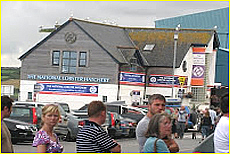
The National Lobster Hatchery can be found in a purpose built Visitors Centre on the docks of Padstow where it has been located since 2000. It was started as a not-for-profit organisation funded by a variety of sources including RDA, Cornwall County Council, Tesco and ERDF, with other operational costs being supported by the visitors to the centre, their shop and additional research funding but it became a registered Charity in 2004. The National Lobster Hatchery was created to ensure the Cornish Lobster population continues to be sustainable. And to achieve this, they do three things. Stock enhancement, Education and Research.
Stock Enhancement.
Their primary function is stock enhancement and to achieve this they take pregnant females ( with eggs ) and look after them until the eggs have hatched and the young Lobster larvae are strong enough to support themselves. They then take them out to specific locations and release back into the wild. The young Lobsters are very vulnerable in their larvae stage and this is where the highest mortality rates occur with losses being as high as 99.9% in the wild. This process take a few months so the hatchery looks after them during that time to ensure they have a fighting chance. With the removal of threats and diseases, which they would encounter out in the wilds of the ocean bottom, the mini Lobsters released by the hatchery stand a much better chance of survival than wild born ones which helps the populations to be sustained.
Berried hens - keeping it in the family.
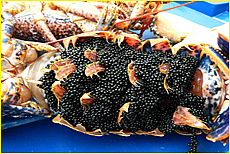
The with egg females, known as Berried Hens, come to them mainly from Lobster fishermen who recognising the need to keep their catch sustainable, call them when they catch one and hand them over so they and their brood can be looked after. There are legal requirements to return Berried Hens back into the sea if you catch any but by handing the Berried Hens over to the Hatchery, the local fishermen are all helping to sustain the Lobster populations and their own industry and income. But to understand why the Hatchery is so important to the long term sustainability of the Lobsters you have to understand their breeding cycle.
Now that's what I call a lot of eggs.
Female Lobsters don't just lay a few eggs, they lay thousands, tens of thousands in fact. The reason for this is because the survival rate amongst the young larvae is horrendously low. As little as 0.01% will make it in the wild ( and even that it optimistic ), so the more eggs you lay, the more babies will survive through to adulthood. And the female Lobsters don't hold back on the eggs either. Their average egg count is anywhere between 3,000 and 15,000 eggs which gives you an idea of the mortality rate in the wild. In reality typically only 1 of this number of eggs will make full adulthood in the wild and with odds like that, it only takes a few environmental situations to knock the local populations for six, so by ensuring a lot more of the baby Lobsters survive their early weeks and months, the Hatchery is making sure the populations continue to thrive.
Rock larvae.
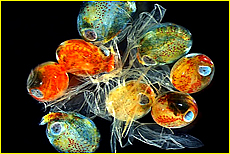
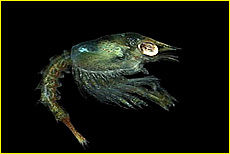
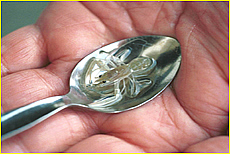
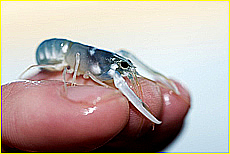
LIke many similar animals, the female Lobster carries her eggs on her body under her abdomen to keep them safe. When they hatch, the young Lobster larvae evolve into mini Lobsters within a few weeks and stay close to mummy for a few months before she releases them into the surrounding water. The young Lobsters spend around 3 to 4 weeks swimming around in the water, usually near the surface, growing and shedding their shells around 4 times as they develop before finally settling on the bottom, where they spend the rest of their lives. Being generally very secretive, for survival purposes more than anything else, the young Lobsters tend to live in burrows they dig themselves, or in rocky and stony crevices, small spaces in wrecks, etc, and in any other areas where they can remain hidden. It you look at some of the images on this page of them when they are really small, you can easily see just how defenseless and vulnerable they are at this stage of their lives.
Hide and seek.
As soon as the young Lobsters hit the bottom of the sea, they typically dig a burrow and hide themselves away from danger. And given that they are very small, around an inch or less long, there are dangers aplenty. They stay in burrows until they out-grow them and then have to find or dig a larger one so they can shed their skin and then grow a little bit more. And this is the pattern of their life. Find a place to hide, eat some food, grow a bit and then shed your skin. Find another home, eat and grow a bit more, evade all threats, find a mate, have some babies. And so it goes on.
 |
 |
 |
 |
Education.
Along with helping to increase the stock of Lobsters, they recognise that to sustain their work and the continued success of their operation, they also need to educate people about why we need to conserve Lobsters and the benefits of doing so, so they run a very comprehensive education operation. Firstly, they are one of very few Marine Biology Laboratories in the world that is actually open to visitors and you can visit them at their Visitor Centre in Padstow. Secondly, they provide education courses at every level, from pre-school groups through to to postgraduate students.
Higher education modules.
In addition to delivering modules on the Marine Aquaculture Foundation Degree & Marine Conservation Foundation Degree at Cornwall College, Newquay and the MSc Sustainable Aquaculture Systems Degree at the University of Plymouth, they also offer Student Placements, Scholarships and in-house lectures and an interactive tour of our scientific work and aquaculture techniques at the Hatchery.
Education for schools.
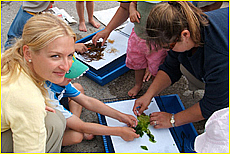
They are also committed to increasing awareness of marine conservation issues and offer a variety of unique educational opportunities that cover a variety of topics in the national curriculum which makes them idea for schools to visit. Along with seeing first hand the fascinating progression of a lobster from egg to adult and learning about their own conservation and research work, children can also learn about the wider marine environment and why we should protect it. And as their staff are highly qualified with vast experience in business, aquaculture, fisheries and the aquatic trade, they are happy to help you tailor your visit to include activities or group requirements not specifically mentioned in their standard programmes.
Educational facilities.
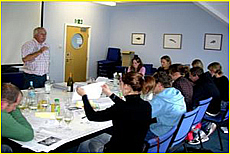
As well as a stunning Visitor Centre and working laboratory, the Hatchery also has first class teaching areas and teaching facilities consisting of a large lecture room with multimedia centre and microscopy facilities. In addition, their location next to the Camel estuary and the nearby beaches, combined with the benefit of their facilities, expertise in identifying aquatic organisms and explaining aspects of the marine environment, makes the NLH the ideal base for field trips to the coast. nd they love explaining things so why not take your school there too?
 |
 |
 |
 |
Research.
As you might expect, to be able to effectively support their Lobster stock enhancement operations, a lot of continual research and development work is required. A lot of groundwork has already been undertaken by both Norway and the UK which has established the potential for stock enhancement of the European Lobster and sown the seeds for several hatcheries to be established around Europe. However, having established the various operational processes, further work is required to drive down the unit costs of production and also to reduce the risks faced by Lobster hatchery operators. These include further research on the Lobsters dietary and feeding requirements, the identification and elimination of disease and contamination issues, further development of future release strategies and research on coastal environmental issues including release site limitations due to poor water quality and offshore water treatment development, etc.
Environmental issue research.
In addition to the specific Lobster related threats, there are also other major threats and sustainability issues facing the whole shellfish industry in the South West region that need to be examined and addressed and a lot of the work done in these areas doesn't always receive the attention that they deserves. As an example of this, the work undertaken by the National Lobster Hatchery, University of Plymouth and Plymouth Marine Laboratory on the effects of ocean acidification on Lobster larvae development and survival rates was the first of its kind.
The importance of long term research.
There also also many other things they do and have done that never get shouted about and the Hatchery is committed to identifying the long term sustainability issues faced by the industry and to ensure the fishery sector can be made more profitable and more sustainable. This includes examining issues like oceanic ecotoxicology, waste management and long term fishery management issues. This research doesn't just benefit the Lobsters either. These are issue that affect us all in one way or another so it is very important that they are able to continue their research. And to do so requires significant funding.
Research funding requirements.
As you will appreciate, to fully realise and develop the full research potential of the National Lobster Hatchery, significant ongoing funding is required. This will enable them to further enhance their reputation and increase their links and capacity to draw down further funding from both Europe and elsewhere, for aquaculture and fisheries R&D. To help with this, they have created a centre of excellence for shellfish research that is funded both through visitors to their Visitor Centre and other external sources. And the more their name and successes become known, the more funding they can attract, so your visit to them is actually doubly important because it provides funding to help them grow which in turn generates other interest and funding opportunities.
Visit them and help them move the game on.
However, their plans don't stop there. They want to host research in many other highly important and crucial areas, which you can find out more about on the R & D pages on their website www.nationallobsterhatchery.co.uk/research and also attend conferences and exchanging knowledge as well as bursaries to enable them to attract high calibre Master students for specific ongoing projects. And they are continually and actively seeking the necessary finding to achieve these aims. So if you want both a great day out and the chance to help their research and sustain an animal that is a very important part of Cornwall, please visit them and if you feel like it, you can gift some extra money to them and even adopt your own Lobster as well.
 |
 |
 |
 |
The National Lobster Hatchery - Their history.
The National Lobster Hatchery can be found in a purpose built Visitors Centre on the docks of Padstow where it has been located since 2000. It was started as a not-for-profit organisation funded by a variety of sources including RDA, Cornwall County Council, Tesco and ERDF, with other operational costs being supported by the visitors to the centre, their shop and additional research funding but then became a a registered Charity in 2004. It came about due to a strong decline in fishing stocks around Cornwall and the Isle of Scilly in the late 80's.
Safeguarding and conserving future stocks.
To counter the decline, the Cornwall Sea Fisheries Committee, responsible for fisheries management out to six miles from the Cornish coast, decided to take a multi-dimensional and proactive approach to managing stocks and in 1994 introduced a bye law that raised the minimum landing size to 90mm in length and banned the landing of female egg bearing Lobsters ( Berried Hens ). In addition, fishermen also mark female Lobsters by notching their shells, known as V Notching, and put them back so if they are caught again the fishermen will know they were females and return them, etc. Up to that point, only females with eggs were put back, the notched ones without eggs were landed, but as part of the conservation programme the landing of V notched Lobsters was also banned as well. But they didn't stop there.
The Hatchery was conceived.
Trying to halt the decline by introducing these methods was one thing, but they saw that it wasn't enough so they went a lot further and Edwin Derriman (Chief Fisheries Officer) for Cornwall and the Isles of Scilly proposed the concept of the hatchery, as an additional safeguard to conserve our stocks and it opened in 2000. The results of its work have been very successful as The Cornwall Sea Fisheries shellfish stock survey in 2003 – 2006 indicated when it found that the number of landings had increased by 31%, but as good as that increase is, the National Lobster Hatchery have not become complacent. They know the stock levels have to be sustained so they have expanded their operation to ensure the Lobster population continues to grow and thrive in the 365 miles of coastline around Cornwall. But extra funding to continue their good work, is a constant pressure so they need your support by visiting them.
 |
 |
 |
 |
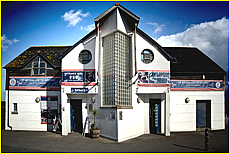
The Visitor Centre |
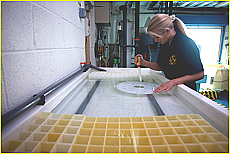
The Team |
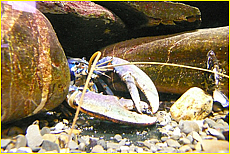
One of the residents |
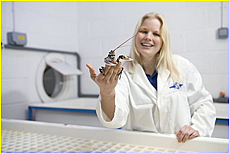
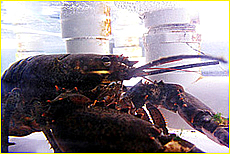
A female Lobster |
 |
 |
 |
 |
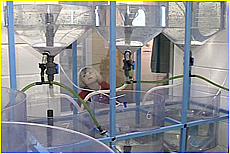
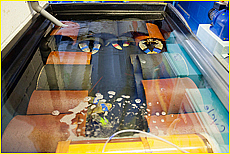
Berried hens in breeding area |
Lobster Larvae in growing area |
A tiny baby Lobster |
Ready for release |
 |
 |
 |
 |
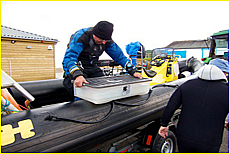
Going off to be released |
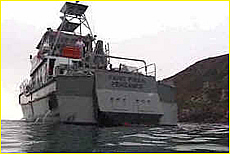
Out to sea to a release site |
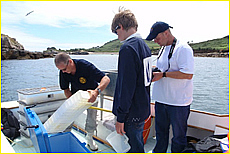
Unpacking the brood |
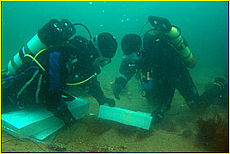
Releasing the babies underwater |
 |
 |
 |
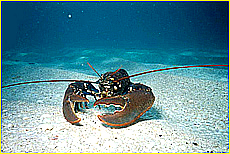 |
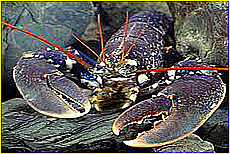
The end result - Lobsters in the wild |
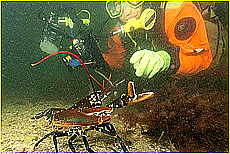
A Lobster playing with a diver |
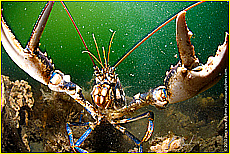
I want food so make it snappy ok |
Lobsters love the sand too |
|
|
 |
Our business methodology is very simple. We are promoting Cornwall as an all year round holiday destination and to do this more effectively, we need your local stories and feed back from your visit to Cornwall which we will post on a dedicated page, so please send us your thoughts and any tourism related local stories or your feedback on your stay in Cornwall. We will publish them on the website every two weeks and we will give the best story of each fortnight a free Cornwall Pass so please send your stories and information to us on editor@cornwalltourismmagazine.com and we will publish them for you.
 |
The Cornwall Pass - save money at over 300 different businesses when you visit Cornwall and Devon.
If you are holidaying in Cornwall or Devon, just visiting us for a few days or live in Cornwall, you can save money at over 300 businesses with the Cornwall Pass. The Cornwall Pass is a discount card that allows visitors to Cornwall and residents to make big savings at over 300 businesses all over Cornwall. It has been in operation since 2008 and gives you discounts and savings at over 300 businesses like Attractions, Restaurants, Accommodation, Cornish Farm Holidays, Activities, Historic sites and Gardens, Zoo's and Wildlife Parks, Surfing, Body boarding and Coasteering, Holiday Parks, Golf Courses, Taxi's, Dining Pubs and many others across Cornwall.
Discounts start at 10% with many of our participating businesses offering much higher discounts. Each Cornwall Pass covers up to 5 persons and can be used as many times as you like, in as many different participating businesses as you like. If you are visiting Cornwall there is a 7 Day or 14 Day Pass for £7.00 and £10.00 and for frequent visitors and residents there is a 12 month Pass for £20.00 and to put the Pass into perspective, you can easily save up to £200.00 a week or more. For more information and to purchase your Cornwall Pass using our secure on-line purchasing system, please click here, the Cornwall Pass.
|
 |
 |
 |
|
 |
|
 |
|
 |
|
 |
|
 |
|
 |
 |
|
|
|
|
|
|
|
|||||||
 |
 |
 |
 |
 |
|
 |
 |
Advertising and Distribution Information| Magazine Advertising Rates | Magazine Advertising pre-booking form
The Cornwall Pass | Information Privacy Policy |
The Cornwall Tourism Magazine . Copyright (c) 2011 - 2023 Cornwall Tourism Magazine. All rights reserved. Website Design In Cornwall
..........


