
 |
 |
 |
 |
 |
 |
 |
 |
Welcome to the Cornwall Tourism Magazine - Cornwall Tourism Magazine - Newquay page.
Newquay is the surfing capital of Cornwall and Europe but there is so much more to Newquay than just surfing so
on this page you will find out all about Newquay and why it is so popular.
|
|
 |
 |
 |
 |
 |
 |
 |
 |
 |
 |
 |
 |
 |
 |
 |
 |
 |
 |
 |
 |
 |
Cornwall Tourism Magazine - Newquay.
Apart from Penzance, Newquay is perhaps the most well known town in Cornwall and that is all down to its lovely flat beaches that produces the ideal waves for surfing. In fact there are so many surfing schools, board hire and surfing shops in Newquay, that you would be forgiven for thinking it was the surfing capital of the world. However, there is a lot more to Newquay than just surfing. It has a lovely harbour, the beaches I have already mentioned but as well as great surfing beaches, they are all safe and ideal for families so if you are not into surfing, you can still enjoy them to the full. There is also some amazing scenery in and around Newquay and lots of shops, bars, restaurants, hotels and other accommodation option and attractions so everyone can enjoy Newquay. And whilst, by the very nature of surfing, it does attract a younger crowd, Newquay is suitable for all ages.
 |
 |
 |
 |
Newquay history - The early days.
Newquay's history goes way back to pre-historic times and whilst we are not sure its first inhabitants enjoyed surfing, there are some pre-historic burial mounds and an embankment on the area now known as The Barrowfields in Trevelgue. Excavations here have revealed cooking pots and the remains of a Bronze Age chieftain, who was buried there about 3,500 years ago. Evidence of a Bronze Age settlement has also been found at a nearby farm that overlooks the River Gannel which is the large inlet tot he south of Newquay. There is also the remains of an Iron Age Hill Fort on Trevelgue Head which was in continuous occupation from around 300 BC through to 6th century AD, so as you can see,newquay has been popular for a very long time.
Medieval times.
The main reason Newquay became a settlement is due to its location. The main headland provided a natural sheltered harbour area in what is now Newquay Harbour and being protected from the bad weather, Newquay as it is today, started off as a small fishing. It is not known for sure when the village began as there is no mention of it in the Domesday Book which recorded all or most of the settlements in England in 1086 after the Norman Invasion, although a local house ( now the Treninnick Tavern )was included so at least one family was living there,but given the type of dwellings then and the nature of the people, it is quite possible that an established settlement didn't materilise until until much later.
From Blown Sand Dunes to Newquay.
A settlement did indeed grow there though because by the 15th century, the village was called Towan Blystra. Towan is a Cornish word for sand dune and Blystra means blown, so Newquay was first called " Blown Sand dunes " and that was the thing with old Cornish names, they are literal descriptions of the settlements locations. We also know that Newquay ( Blown Sand Dunes ) was a well used anchorage because in 1439 the local businessmen applied to the Bishop of Exeter for funds to build a " New Quay " at the settlement which is how Newquay got its name. Again this shows just how literal Cornish town and village names can be. The current harbour was built in 1834.
 |
 |
 |
 |
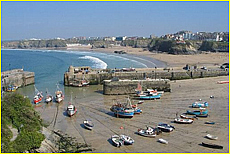
Newquay Harbour today |
The headland from Fistral beach side |
The headland from the harbour side |
Storm waves breaking over harbour wall |
Modern times.
In 1800, there were some 1300 inhabitants in Newquay, but it was still called a village back then. But it continued to grow, especially in the later part of the 19th Century when, like most coastal areas in Cornwall, the railway arrived in 1876. This opened up trade opportunities and also the influx of more passengers who began to come to newquay because of the beaches and scenery. Towards the very end of the 19th Century, a number of large hotels were built. As you would expect the largest area of population growth developed around the railway station area and in 1930, Station Road became Cliff Road and the large houses along Narrowcliff, were also converted into hotels. Newquay expanded dramatically in the 20th Century, especially during the 1950's as did the fishing industry, although this has declined in later years. Today, Newquay's primarily income as a whole from tourism and along with the surfing side, it is an extremely popular location for tourists.
 |
 |
 |
 |
Lets go surfing.
To many people, Newquay is the surfing capitol of the world and quite rightly so as it has some of the best surfing beaches in the world. The flat level beaches allow for big waves with long sweeps and the flatness of the beach allows the waves to rise up quite high which all makes Newquay the perfect place for surfing. It is definitely the surfing capital of the UK and you will find lots of Surfing Schools, surf board hire and gear shops, it even has its own culture and whether you are a beginner or a highly experienced and seasoned surfer, you can enjoy the surfing at Newquay.
Fistral beach.
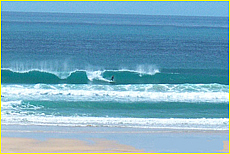
At the centre of Newquay's surfing status is Fistral Beach which has one of the best beach breaks in Europe because it is able to produce long, powerful, hollow waves and a good sized swell even on a calm day, but when the sea is a little on the wild side, which is it quite often, you could be forgiven for thinking you are on the set of Hawaii 5-0. The waves can be massive and just standing on the beach and watching them is exciting enough, let alone surfing them. Fistral Beach has hosted many international surfing competitions for 20 years now, most recently the Rip Curl Boardmasters Tournament or the Boardmasters Festival as it is actually called. Newquay is also home to the Cribbar reef which with its 20 feet (6 m) waves has only recently been regularly surfed. Along with Fistral beach, Towan, Great Western and Tolcarne, Crantock Bay and Watergate Bay also provide high quality breaks so all of newquay's beaches provide excellent surfing.
 |
 |
 |
 |
 |
 |
 |
 |
 |
 |
 |
 |
Beaches in Newquay.
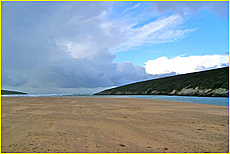
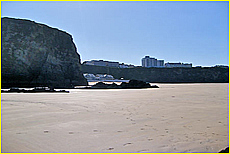
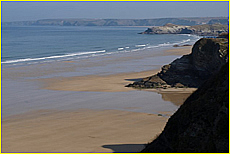
Newquay is blessed with some of the best beaches in Cornwall which are not only very popular with surfers, they are also very popular with everyone and are all child friendly, although as with all beaches, please keep and eye on your kiddies. Newquay's beaches are: Crantock Beach - A beautiful expanse of golden beach with good surf, popular with families because of its sheltered bathing. Fistral Beach - Newquay’s iconic beach, quite simply one of the most consistent and best surfing beaches in the UK and Europe. Home to the Ripcurl Boardmasters, Europe’s largest surf, skate and music festival, its wild. Tolcarne Beach - One of a quartet of town centre beaches, the others being Great Western, Harbour and Towan. Situated at the Northern end of the bay and flanked by high cliffs. Great Western Beach - A sheltered beach with the high cliffs popular with novice surfers. Harbour Beach - Situated within the harbour walls, the smallest of the town beaches is a sheltered, calm beach with no surf, ideal for parents with young children. Lusty Glaze - This hidden gem is a lot more than just a beach. Lusty Glaze is a privately-run beach open to the public which has a unique leisure and training centre to enhance your seaside experience. Surrounded by high cliffs, this sheltered little suntrap has a good expanse of golden sand and is safe for bathing and good for surfing. Watergate Bay - At low tide the beach at Watergate Bay becomes a vast expanse of unbroken golden sand backed by high cliffs. Whipsiderry Beach - A sheltered cove next to the Porth headland. The beach has a number of large caves exposed at low tide but beware – it’s completely submerged at high tide.
 |
 |
 |
 |
Crantock Beach - Newquay |
Fistral Beach - Newquay |
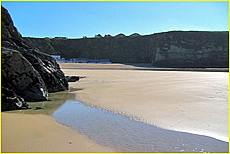
Tolcarne Beach - Newquay |
Great Western Beach - Newquay |
 |
 |
 |
 |
Harbour Beach - Newquay |
Lusty Glaze Beach - Newquay |
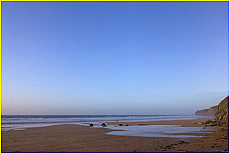
Watergate Bay - Newquay |
Whipsiderry Beach - Newquay |
 |
|
Find the towns in Cornwall - by map.
Please use the map to locate the town of your choice and click on the appropriate icon and link which will take you to the relevant towns page where you can find out about its history, what to do and see there, local villages, images and other interesting items and facts. Alternatively, you can use the manual selection section below where we have alphabetically listed most of the major towns in Cornwall in their appropriate region. To use it, just click on a Town name button and the link will take you to its relevant page. Using the map. To locate a town, please put your curser on the map face, left click your mouse and then use it to move a scroll around the map. The towns will all have a small white balloon icon so when you wish to view a town page, left click on the towns icon, and then click on the link that will appear with the towns name on it. You will then be taken to the towns relevant page. You will find the map on all town pages so if you want to look up another town, just locate it on the map and click on the appropriate icon as described here. Map of Cornwall - Click on the balloon icon link to a town and click on the link when it opens.
 |
 |
 |
 |
 |
 |
|
 |
Our business methodology is very simple. We are promoting Cornwall as an all year round holiday destination and to do this more effectively, we need your local stories and feed back from your visit to Cornwall which we will post on a dedicated page, so please send us your thoughts and any tourism related local stories or your feedback on your stay in Cornwall. We will publish them on the website every two weeks and we will give the best story of each fortnight a free Cornwall Pass so please send your stories and information to us on editor@cornwalltourismmagazine.com and we will publish them for you.
 |
Advertising and Distribution Information | Magazine Advertising Rates | Magazine Advertising pre-booking form
The Cornwall Pass | Information Privacy Policy | Cornwall Tourism Magazine
The Cornwall Tourism Magazine . Copyright (c) 2011 - 2023 Cornwall Tourism Magazine. All rights reserved. Website Design In Cornwall
|


